



Streptopelia orientails (Oriental turtle dove)
The Oriental turtle dove, scientifically known as Streptopelia orientalis, is a graceful and often overlooked species found throughout the temperate zones of Asia. In the Great Himalayan National Park (GHNP), this dove species is most commonly seen in the mixed forests and wooded valleys of the lower to mid-altitude regions, where it forages on the ground and perches quietly in the canopy.
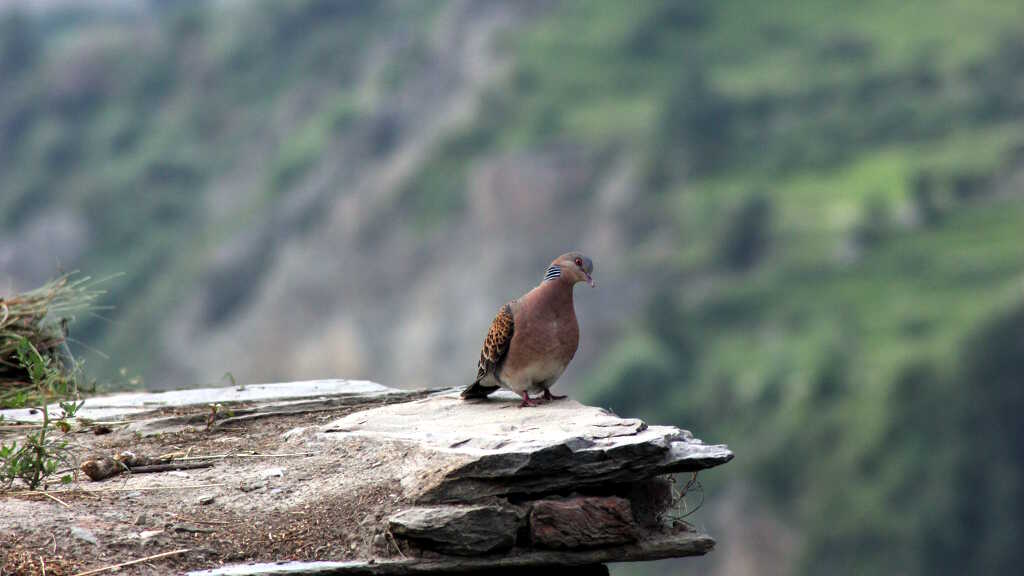
Streptopelia orientails – Oriental turtle dove (click to enlarge)
| Common name | Oriental Turtle – Dove |
| Scientific name | Streptopelia orientails |
| Family | Columbidae (Doves & Pigeons) |
| Description | Large reddish brown dove, scaly pattern above and black-and-white chessboard on the sides of the neck. The tail is broad, rounded with white terminal band conspicuous when alighting. It is similar to the spotted dove and is distinguished from it, by its rich rufus color and stocky pigeon-like build. The sexes are alike. It is a resident of the entire subcontinent, in three races, up to 4000 meters. Their numbers are augmented in winter by extra-limited migrants. In its feeding it prefers grains. It is seen in pairs and in small parties. It moves in flocks while migrating. Its flight is swift and pigeon-like. It feeds on paddy, cereals, and bamboo and grass seeds and is a common sight in the Great Himalayan National Park. |
Identification and Behavior
This dove is slightly larger and darker than the more familiar Eurasian collared dove. It is easily recognized by its rufous-brown plumage, black-and-white striped patches on the neck, and scaled feathering on the wings. The Oriental turtle dove has a soft, rolling call and often feeds on seeds, grains, and berries found on the forest floor.
Unlike many other dove species, it shows a preference for forested habitats, especially during the breeding season. It nests in dense trees, making its platform-like nest from twigs and lining it with softer materials. The bird is shy by nature and is most active during the early morning or late evening hours.
Role in GHNP’s Ecosystem
The presence of the Oriental turtle dove in GHNP highlights the park’s diverse avian population and healthy forest structure. As a ground forager, it plays a small but important role in seed dispersal, contributing to the ecological balance of its habitat.
Conservation and Distribution
Although considered a species of Least Concern by the IUCN, its populations may be affected by habitat loss and hunting in parts of its range. GHNP provides an important refuge for this dove, ensuring its continued survival in the Himalayan region.