



Acytolepis puspa (Common Hedge Blue)
Acytolepis puspa, commonly referred to as the Common Hedge Blue, is a small and delicate butterfly species frequently observed in the Great Himalayan National Park (GHNP). Known for its dainty appearance and fluttering flight, this butterfly adds a soft splash of pale blue to the park’s lush green trails.
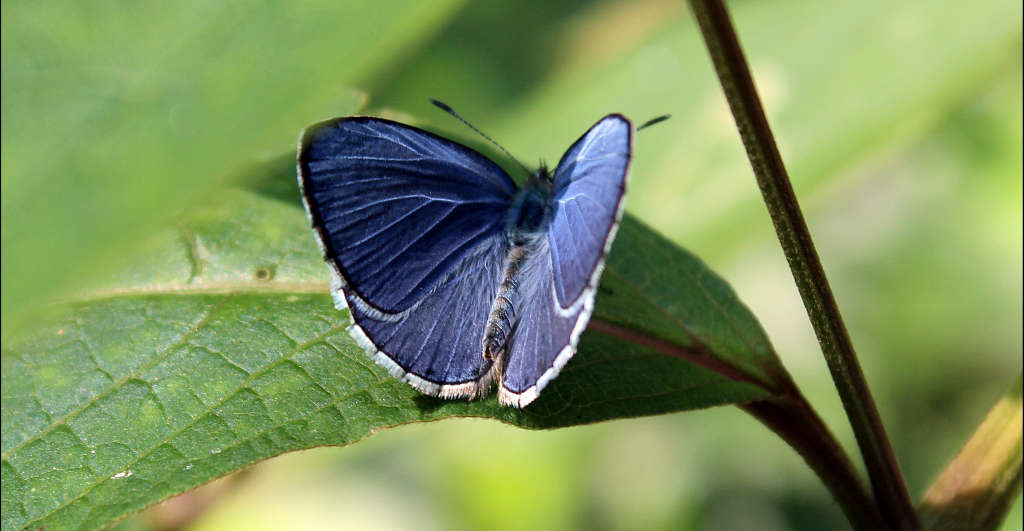
Acytolepis puspa – Common Hedge Blue (click to enlarge)
| Common Name | Common Hedge Blue |
| Scientific name | Acytolepis puspa |
| Family | Lycaenidae |
| Description |
The upperside of Acytolepis puspa is typically a shimmering light blue in males, while females display more subdued tones with dark edges. The underside is pale white or grey, marked with fine dots and dashes that help it camouflage effortlessly against tree bark and leaves. Its dainty size and fluttery movement often make it appear as a drifting petal when in flight. Within GHNP, the Common Hedge Blue is usually found in moist deciduous forests, shady glades, and near water sources. It thrives at altitudes ranging between 1,200 to 2,800 meters and is most active during the warmer months from spring to early autumn. The butterfly lays eggs on legumes and other small herbaceous plants, which act as food for its caterpillars. Adults are often seen feeding on nectar from low-growing wildflowers or resting on damp patches to absorb minerals. Despite its small size, Acytolepis puspa plays an important role in pollination and adds to the biodiversity richness of GHNP. The presence of Acytolepis puspa is a good indicator of undisturbed, healthy habitats. For those exploring the butterfly trails of GHNP, this tiny blue wonder is a reminder of the ecosystem’s fragility and diversity. Explore more native butterflies of GHNP like Udara dilecta and Lasiommata schakra. |