



Bergenia stracheyi (Pasanbadh)
Bergenia stracheyi, commonly known as Pasanbadh or Paashanbheda, is a hardy perennial herb that grows in the alpine and subalpine zones of the Great Himalayan National Park (GHNP). Known for its remarkable medicinal value, especially in traditional Ayurvedic and Tibetan medicine, this plant thrives in rocky habitats at high elevations.
Habitat and Distribution
Found at altitudes between 2,500 and 4,000 meters, Bergenia stracheyi flourishes on:
-
Rocky slopes
-
Moist boulders
-
Glacial moraines
In GHNP, it is often observed in locations like Rolla, Shilt, and Tirthan Valley’s upper trails, especially during the flowering season in late spring to early summer.
Botanical Description
-
Belongs to the Saxifragaceae family
-
Thick, fleshy, ovate leaves with leathery texture
-
Bears clusters of pink to purple bell-shaped flowers
-
Rhizomatous root system, which is the main medicinal part
Its ability to cling to rocky substrates has earned it the Sanskrit name Paashanbheda, meaning “rock-breaker.”
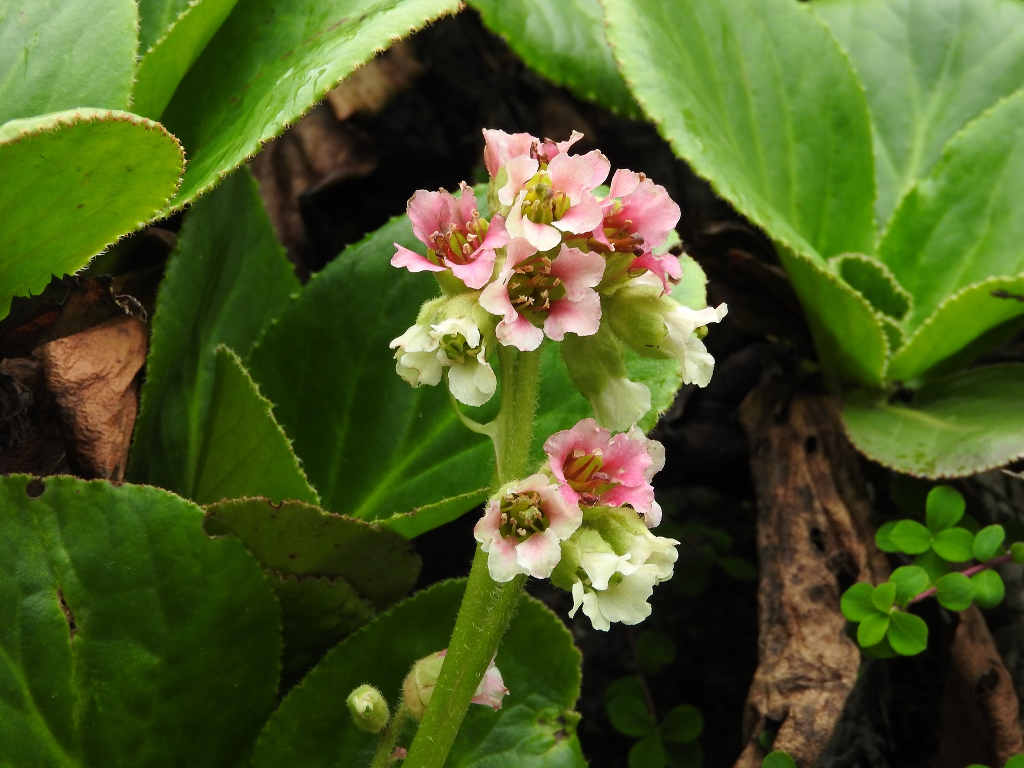
Bergenia stracheyi (Click to enlarge)
| Local name | Sabla, Pasanbadh |
| Botanical name | Bergenia stracheyi |
| Family | Saxifragaceae |
| Description and uses | They are clump-forming, rhizomatous, evergreen perennials with a spirally arranged rosette of leaves 6–35 cm long and 4–15 cm broad, and pink flowers produced in a cyme. The leaves are large, leathery, ovate or cordate, and often have wavy or saw-toothed edges. For most of the year, the leaves have a glossy green colour, but in cooler climates, they turn red or bronze in the fall. The flowers grow on a stem similar in colour to a rhubarb stalk and most varieties have cone-shaped flowers in varying shades of pink. These can range from almost white to ruby red and purple. It is common glacial moraines and on moist rocky slopes all the valleys of GHNP in an altitude of 3000-4000m. The roots are used in the treatment of stones in kidney and also as a poultice for stiff joints. The root powder is considered diuretic. |
Medicinal Uses
Bergenia stracheyi is widely used in:
-
Treatment of kidney stones
-
Urinary tract infections
-
Inflammation and respiratory issues
-
Antioxidant and anti-inflammatory therapies
The dried rhizome is particularly valuable in Ayurveda, Unani, and Amchi medicine.
Conservation Importance
Due to increased demand and unregulated harvesting, Pasanbadh is under pressure in the wild. GHNP plays a crucial role in its in-situ conservation, supported by eco-awareness programs and biodiversity monitoring.