


Trillidium govanianum (Nag Chhatri)
Trillidium govanianum, locally known as Nag Chhatri, is a rare and highly valuable medicinal plant found in the high-altitude regions of the Great Himalayan National Park (GHNP). Known for its distinctive whorled leaves and solitary nodding flower, this plant holds ecological and ethnobotanical significance in the Himalayan biodiversity hotspot.
Botanical Description
Trillidium govanianum belongs to the family Melanthiaceae and is easily recognized by its umbrella-like three-parted leaves arranged in a whorl and a purple to dark maroon flower that hangs gracefully from a single stalk. It is typically a small herbaceous plant that thrives in moist alpine meadows and forest clearings, often at elevations between 2,500 and 4,000 meters.
Habitat in GHNP
In the Great Himalayan National Park, Nag Chhatri is usually found in subalpine zones, particularly in areas like Shilt, Rakhundi, and Rollah meadows. These zones provide the rich humus and shaded conditions this species prefers. Due to its narrow ecological niche and specific growth requirements, its presence indicates healthy alpine ecosystems.
Medicinal Value
Nag Chhatri is highly sought-after in Ayurvedic and traditional Himalayan medicine. The rhizome of this plant is known to have aphrodisiac, anti-inflammatory, and anti-spasmodic properties. It is traditionally used to treat ailments like sexual debility, rheumatism, and menstrual disorders.
Because of its reputed medicinal properties, Trillidium govanianum is overharvested, making it one of the most threatened medicinal herbs in the Himalayas.
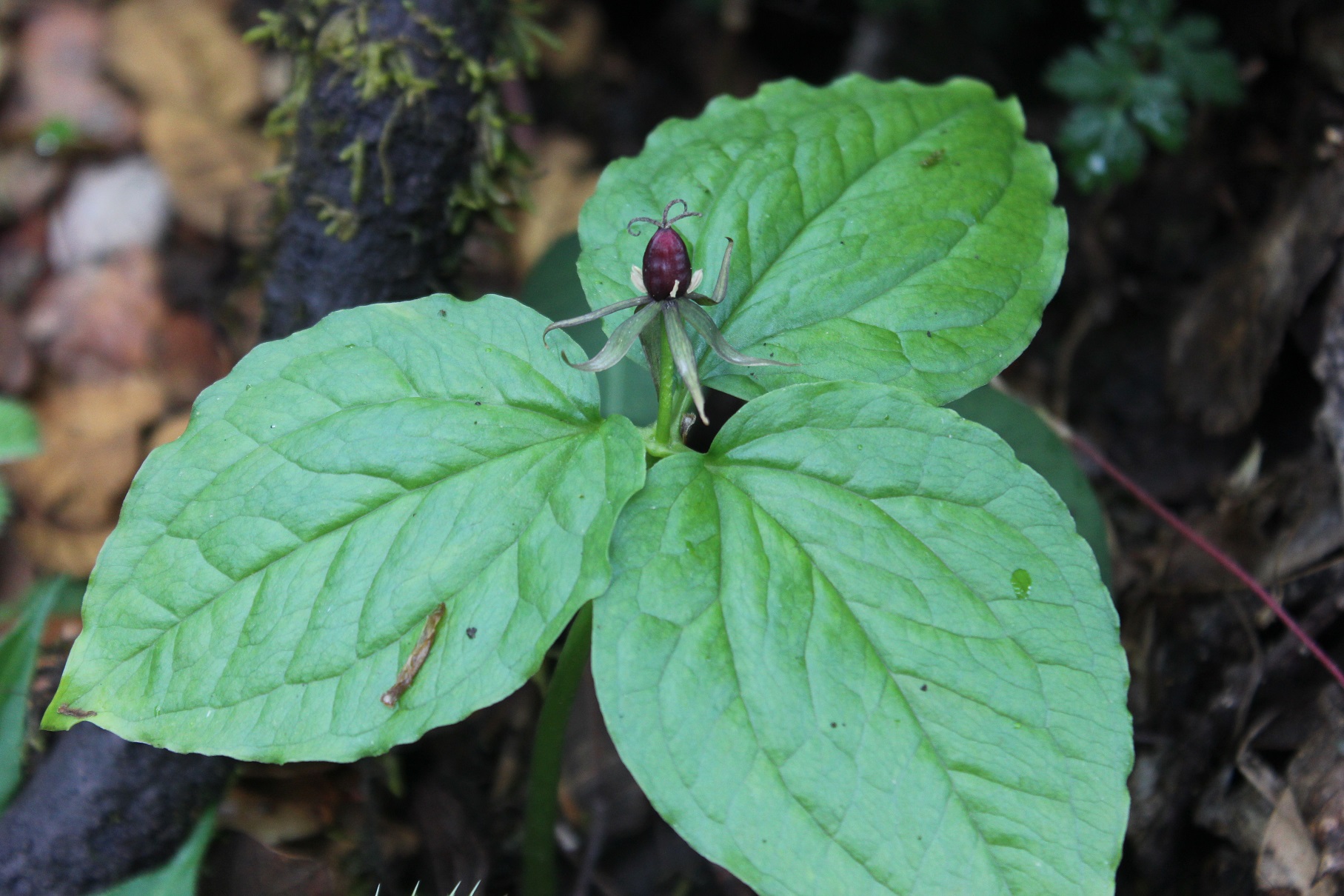
Trillidium govanianum – Nag Chhatri (click to enlarge)
| Local name | Nag Chhatri, Himalayan Trillium |
| Botanical name | Trillium govanianum |
| Family | Melanthiaceae |
| Description and uses | Himalayan Trillium is a robust, trifoliate perennial herbaceous plant species with deep red and green coloured flowers on the axis and is found in the Himalayas, especially in India, Nepal, China and Bhutan at an altitude of 2700m-4000m. Stocky 15 cm purple-red stems carry 3 green leaves just below a single, small, starry flower of deep red and green color.Roots contain Trillarin, which on hydrolysis yields 2.5% diosgenin – a cortico-steroid hormone. Reportedly, the cortico-steroid hormone isolated from the plant is used in various preparations like sex hormones; cortisone and allied preparation used in rheumatism, regulation of menstrual flow and in stomach related problems. Due to its effective medicinal properties, the demand of this drug is high in the international markets and is often smuggled out to markets in Punjab. |
Conservation Concerns
Trillidium govanianum is listed as Endangered by the IUCN and is protected under Schedule VI of India’s Wildlife Protection Act. Over-collection, habitat loss, and a lack of sustainable harvesting methods have led to severe population declines. GHNP provides a critical refuge for the remaining wild populations of this plant.
Community-based conservation initiatives and awareness programs within GHNP are essential to its survival, alongside scientific efforts for propagation and reintroduction.
Cultural Importance
The name “Nag Chhatri” (Cobra Umbrella) arises from the shape of its leaves, believed to resemble the hood of a cobra. Locally, it is associated with mountain spirituality and folklore, and its presence is often regarded as auspicious.