


THE OFFICIAL WEBSITE OF THE GREAT HIMALAYAN NATIONAL PARK
+91 1902 265320
dirghnp@gmail.com
Accessibility
Screen Reader
Decrease Font Size Default Font Size Increase Font Size
Great Himalayan National Park
  • Home
  • About
    • About UNESCO WHS
    • Park Introduction
    • Park History
    • People’s Contribution
    • Facts & Figure
    • Climate
    • Biogeography
    • Flora and Fauna
    • Maps
    • Terrain
      • General Geography
      • Geology
      • Rock and Soil
      • Hydrology
      • Erosion
      • Landslides
  • Destinations
    • Tirthan Valley
    • Sainj Valley
    • Parvati Valley
    • Jiwa Nal Valley
  • Activities
    • Treks
    • Local Sightseeing
    • Season Based Activities
  • Plan
    • Current Conditions
    • Access
    • Fees, Rules and Guidelines
  • Biodiversity
    • Fauna
    • Flora
  • Contact
    • Contact Details
    • Emergency Contacts
  • Book Your Stay
  • Login
Plan Your Trip
Accommodation Trek Permits
Place of Stay
Forest Rest House Shangharh
Forest Rest House Ropa/ Sainj
Forest Complex – Shai Ropa
Rooms
Dormitory
1
2
1
2
3
4
5
6
7
8
9
10
Place of Stay
Forest Rest House Shangharh
Forest Rest House Ropa/ Sainj
Forest Complex – Shai Ropa
Rooms
Dormitory
1
2
1
2
3
4
5
6
7
8
9
10
  • Ochotona royeli (Indian Pika)
  • Mongoose,Herpestes edwardsii
  • Rhesus monkey
  • Ursus thibetanus (Himalayan black bear)
  • Ursus arctos (Himalayan brown bear)

Pseudois nayaur (Bharal)
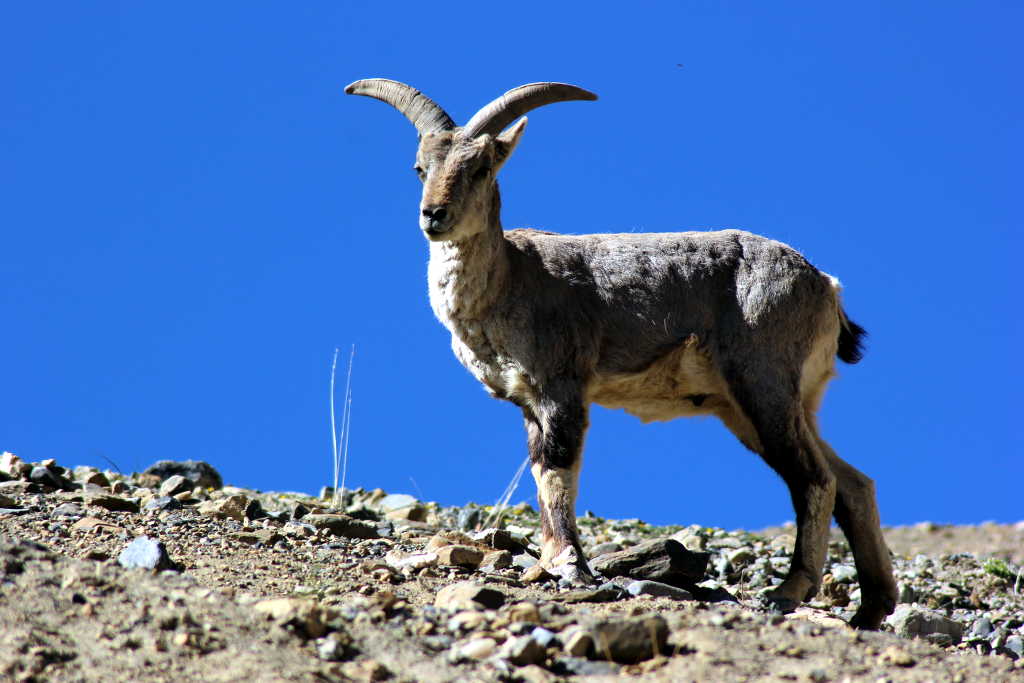
Common name Greater Blue Sheep
Latin name Pseudois nayaur  Hodgson 1833
Local name Bharal
IUCN/WPA/Indian status Least concern/I/Locally common
Social unit Solitary animals are common and herds mostly occur in medium sized group of 10-15, sexes usually segregate in summer when males mostly occur  in all male groups and females and young separate into more secure areas
Size / weight HBL : 120-140 CM, HAS : 80-91.4 cm. (male) HL: 38-76 cm.(male) 10-20 cm ( female ) Weight : 60-75 kg ( male) and 35-55 kg (female)
Description Adult male Bharal have a slate blue coat. Ina winter, this colouration becomes more pronounced, while in summer the coat becomes red brown especially in females and young , serving as better camouflage. The trans Himalayas rams tend to achieve a light almost cream, colouration while in Himalayas the colour is much darker Adult rams in both areas have dark brown to black markings on the neck. The tail is short and dark. The males horn are very characteristic and curve outward, backward and then downward in a crescent formation. Females are one –third the size of the males , have much shorter and thinner horns that diverge out are dull shale in colour and have dark grey instead of black markings on their body.
Behavior During rut , males  rear up and strike each other like goats. However, they court females by raising their forelegs and stretching out their head in sheep like fashion, They may mouth their own red penis as a threat display but they may rub their face on the rival’s backside in appeasement.
Distribution The Greater Himalayan meadows and trans Himalayan regions in India from Jammu & Kashmir to Arunachal Pradesh. Along with serow, has the largest distribution of a Himalayan mountain ungulate in India.
Habitat Temperate and subalpine forests precipitous terrain with grass cover and slopes with oak and bamboo forests. In the Greater Himalayas, found on southern forested slops(1550-5300 m although they prefer higher altitudes between 2000-4400 m)
Best seen Kibber WLS Himachal Pradesh Hemis NP Jammu & Kashmir, Gangotri NP Uttarakhand

Official Logo of the
Great Himalayan National Park

Website Related Links
  • Accessibility Statement
  • Downloads and Plug-ins
  • Website Policies
  • Terms & Conditions
  • Disclaimer
  • Credits
  • Help
GHNP Related Links
  • Park Organisation
  • RTI
  • News & Articles
  • Media & Press
  • GHNP’s Blog
External Links
  • India’s Portal
  • Himachal Pradesh’s Portal
  • District Kullu’s Portal
  • Himachal Tourism’s Portal
  • HP Government Holidays
  • Emergency Contacts
Conservation
  • Conservation Overview
  • Known Pressures in GHNP
  • Present Day Scenario
  • Institutional Framework
  • Management Plan
  • Protection Measures
  • Research and Monitoring
  • Conservation Education
Website Designed and Developed in the mountains by
Svaksha Technologies LLP

All Rights Reserved.

Content on this website is published and managed by Great Himalayan National Park Authorities. For any query regarding this website, please contact the Web Information Manager.

Hit Counter 771034

Last Updated 03 September, 2025

Hey! We need something to search for

The search field cannot be left empty. Please enter a valid search term or keyword to help us find the results you’re looking for.