



Berberis Lycium (Kashmal)
Berberis lycium, commonly known as Kashmal, is a medicinal shrub found in the Himalayan region. It is renowned for its bright yellow roots and medicinal properties, making it a valuable plant in traditional herbal medicine. This species is particularly prevalent in the Himalayan foothills and can be spotted in areas within Himachal Pradesh, Jammu & Kashmir, and Nepal, including the protected areas of the Great Himalayan National Park (GHNP).
Habitat and Distribution in the Himalayas
Berberis lycium thrives in arid to semi-arid environments at altitudes between 2,500 and 4,000 meters. It is commonly found in rocky slopes, scrublands, and woodland edges in the Himalayan belt. Within GHNP, Kashmal is often spotted growing in well-drained soils with moderate moisture levels, making it a resilient plant able to adapt to various climatic conditions, including cold winters and moderate rainfall.
Botanical Characteristics
Kashmal is a deciduous shrub that can grow up to 1.5 meters in height. It has distinctive spiny branches and ovate leaves that turn a reddish-brown color in the autumn. During the spring, it produces small, yellow flowers that are clustered at the branch tips. These flowers eventually develop into bright red berries that are oval-shaped and rich in vitamin C.
The plant’s roots are of particular interest in herbal medicine. Berberine, a potent alkaloid present in the roots and bark, gives Berberis lycium its therapeutic properties, making it a sought-after plant for medicinal use.
Medicinal and Therapeutic Uses
Kashmal (Berberis lycium) has a long history of use in traditional herbal medicine, particularly in Ayurveda, Unani, and Tibetan medicine. The plant is prized for its antibacterial, anti-inflammatory, and antioxidant properties. Some of its most notable medicinal uses include:
-
Digestive health: The plant is known to stimulate appetite, improve digestion, and treat digestive disorders like dyspepsia and diarrhea.
-
Liver health: It is traditionally used to treat liver-related issues, such as jaundice and hepatitis, due to its ability to support liver function.
-
Blood purification: Kashmal is believed to have blood-purifying effects and is commonly used in the treatment of skin diseases such as acne, eczema, and psoriasis.
-
Anti-inflammatory properties: The plant’s roots are also used to reduce inflammation and treat joint pain or arthritis.
-
Antibacterial and Antifungal: The plant is known for its ability to combat infections caused by bacteria and fungi, making it a key component in herbal remedies for infections and wounds.
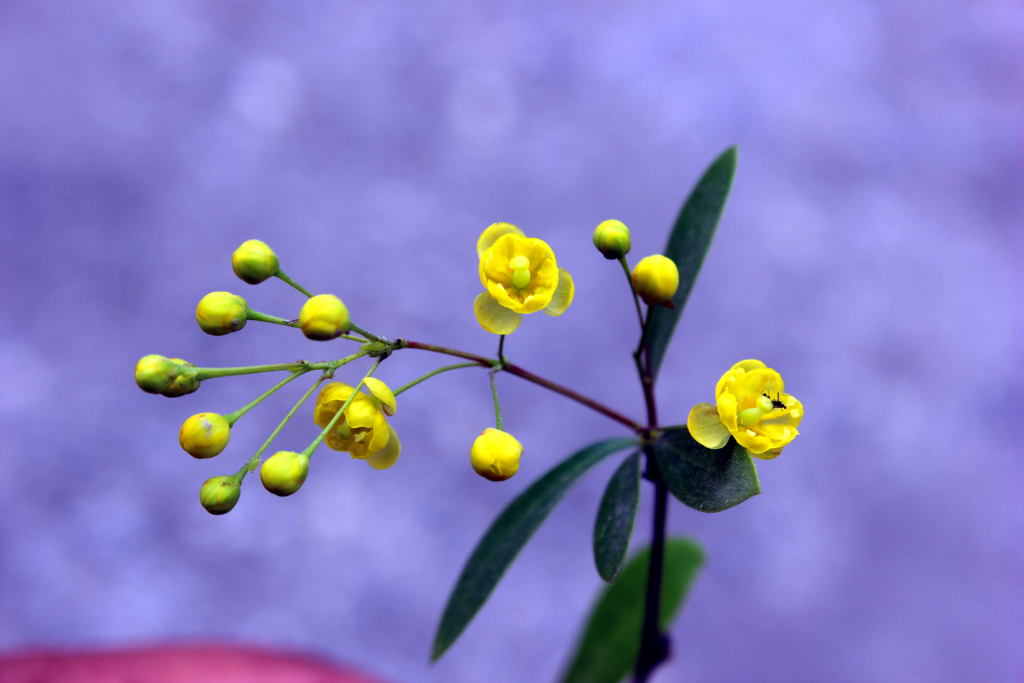
Berberis lyceum – Kashmal (Click to enlarge)

Berberis Lycium – Kashmal (cleck to enlarge)
| Local name | Masholi / Raswanti/ Kashmal |
| Botanical name | Berberis lyceum or Indian lyceum |
| Family | Berberidaceae |
| Description and uses | It is a shrub of 2-4m height, leaves ovate or elliptic, sub sessile. Flowers are yellow in colour and fruits white when young, blue when ripe and found at an altitude of 1500-3000m. The best season for flowering and fruiting is in the month of May. In Ayurveda Berberis lycium found a wide range of applications. In Charka Samhitta it is classified as lekhaniya (reducing obesity and scarifying), arsaghna (curative of piles and haemorrhoids) and kandughna (curative of pruritus) whereas in Sushruta Samhitta it is used for quick healing of wounds, for the treatment of dysentery, indigestion and uterine and vaginal disorders (Dev et al., 2006). |
Ecological Role and Conservation
As a native species of the Himalayan foothills, Berberis lycium plays a vital role in maintaining the health of local ecosystems. The plant provides habitat for wildlife and acts as a soil stabilizer, preventing soil erosion in the mountainous regions where it grows. Its berries serve as a food source for various species, including birds and small mammals.
Despite its ecological and medicinal importance, overharvesting for its roots and bark, combined with habitat destruction due to deforestation and human encroachment, has led to concerns about its conservation status. Efforts are being made within the Great Himalayan National Park to protect this valuable species through sustainable harvesting and habitat restoration programs.
Conclusion
Berberis lycium (Kashmal) is a multifaceted plant with both medicinal value and ecological importance. Its ability to adapt to the harsh conditions of the Himalayan region makes it an integral part of the local flora. By recognizing its medicinal potential and ensuring its sustainable harvesting and conservation, Kashmal can continue to provide valuable benefits for both human health and the ecosystem. Conservation initiatives in protected areas such as the GHNP will help safeguard this remarkable species for future generations.