


Bergenia ciliata (Paatherchatta)
Bergenia ciliata, commonly known as Paatherchatta or Paashanbheda, is a robust medicinal herb found in the temperate and subalpine regions of the Western Himalayas, including the Great Himalayan National Park (GHNP). Valued in traditional Ayurvedic and folk medicine, this plant is renowned for its rock-cleaving properties, used especially in the treatment of urinary and kidney ailments.
Habitat and Occurrence in GHNP
Bergenia ciliata typically grows on:
-
Moist, rocky slopes
-
Forest floors
-
Shady boulders and crevices
In GHNP, it is commonly observed in mid-altitude areas such as Sainj Valley and parts of the Tirthan Valley, flourishing between 1,500 to 3,000 meters above sea level.
Botanical Features
-
Member of the Saxifragaceae family
-
Large, rounded leaves with hairy (ciliate) margins
-
Thick rhizomes and clusters of pink to purple flowers
-
Flowering occurs from March to May
Its thick, leathery leaves help the plant retain moisture, making it ideal for surviving in rocky environments.
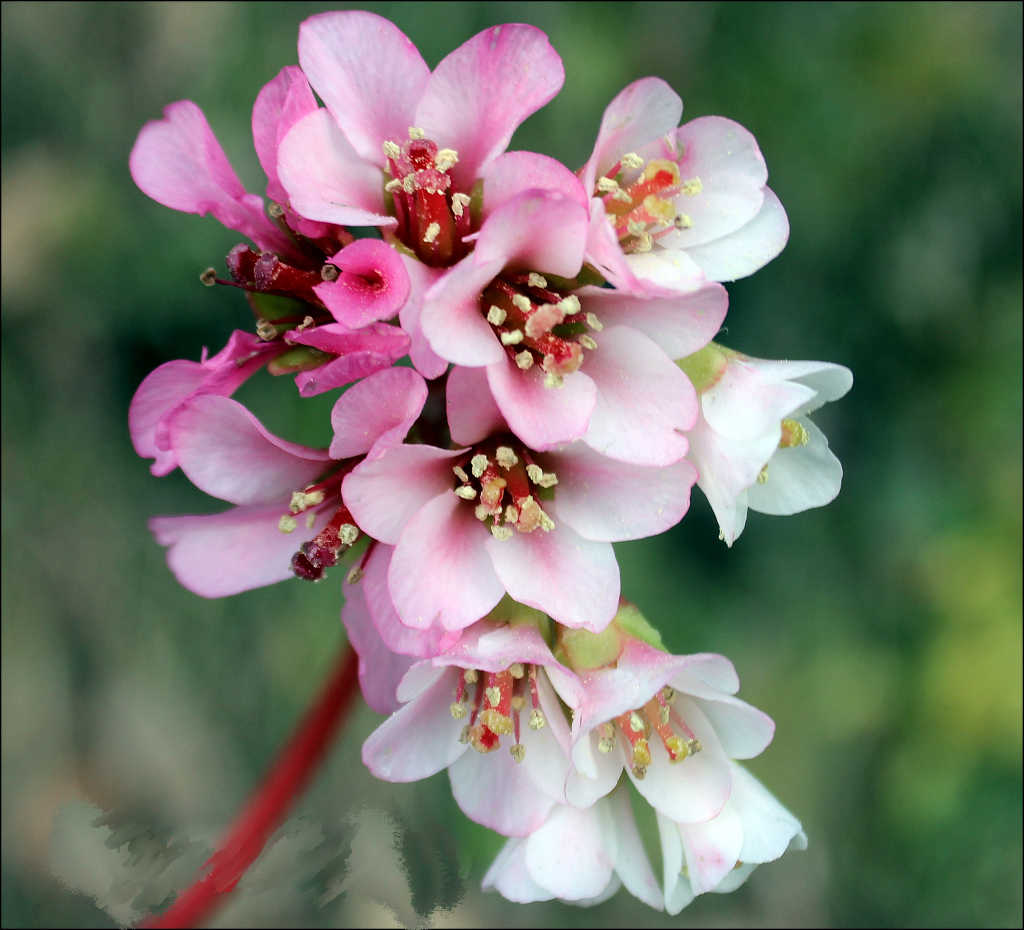
Bergenia ciliata – Paatherchatta ( Click to enlarge)
| Local name | Sanskrit: Pashanabheda, Vatapatri Hindi: Paatherchur, Paatherchatta |
| Botanical name | Bergenia ciliata |
| Family | Saxifragaceae |
| Description and uses | It is an erect, fleshy herb with leaves fleshy, sheathing entire, ciliate, up to 30cm in diameter. The flowering and fruiting time is in the month of June and commonly found at an altitude of 1800-4000m in all the valleys of GHNP. This plant is widely used as a traditional medicine for treatment of kidney stones. It is an effective remedy for haemorrhoids, diarrhea, dysentery, heart diseases, raktapitta and splenic disorders. It relieves the obstructed phlegm in respiratory catarrh, like cough and colds. Pasanabheda is useful as an antidote in opium poisoning |
Medicinal Significance
Bergenia ciliata has a long-standing reputation in Ayurveda for:
-
Dissolving kidney stones
-
Relieving urinary tract disorders
-
Treating cough, ulcers, and dysentery
-
Anti-inflammatory and antimicrobial properties
Its rhizome is the primary medicinal part and is often dried and ground into powder or used in decoctions.
Conservation Note
Although not currently endangered, Bergenia ciliata is vulnerable to overharvesting due to its medicinal value. GHNP supports its natural regeneration and protection through conservation programs and sustainable tourism practices.