



Rhododendron companulatum (Pink Brass)
Rhododendron campanulatum (Pink Brass) is one of the most eye-catching shrubs native to the Himalayan highlands, especially in the subalpine zones of the Great Himalayan National Park (GHNP). Known locally as Pink Brass due to its bell-shaped pink or mauve flowers, this rhododendron species adds vibrant color to the forest canopy during the spring bloom.
This evergreen shrub thrives at elevations between 2,800 and 4,000 meters, where it forms dense thickets along mountain slopes, forest clearings, and ridgelines. Rhododendron campanulatum is particularly common in the moist, temperate forests of GHNP, often found growing alongside deodar, spruce, and fir trees.
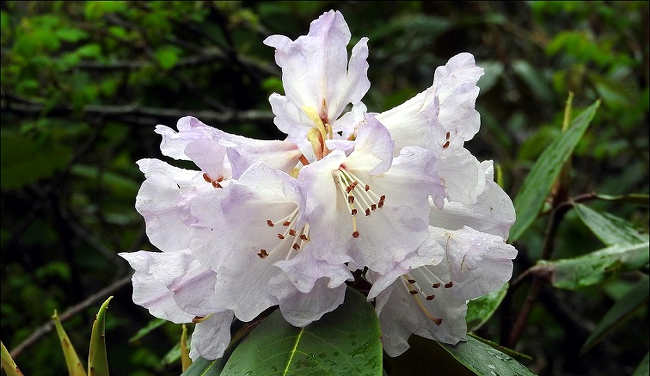
Rhododendron companulatum (Pink Brass)
| Local name | Pink Brass |
| Botanical name | Rhododendron campanulatum |
| Family | Ericaceae |
| Description | It is a dwarf shrub, commonly found at an altitude of 2800-4000m. The leaves of this species are elliptic to ovate in shape. Flowers whitish to pale-rose and often spotted. |
| Distribution | Common on slopes, generally found in association with Betula utilis, Dhela and Gumatao alpine pastures. |
| Flowers & Fruits | June -September |
| Uses | It is applied for skin diseases, mainly itching. The leaves are crushed and massaged with oil. It removes undigested material in stomach, cure fever cough tonic, and induces vomiting. The wood is one of the good high altitude fuel wood mainly used by the alpine graziers and visitors. The buds are said to be poisonous to goats. |
The plant is known for its large, leathery leaves and clusters of bell-shaped flowers, which appear between March and May. These blossoms not only add aesthetic beauty to the region but also attract various pollinators, including bees, butterflies, and birds. Rhododendron campanulatum (Pink Brass) plays a vital ecological role by supporting biodiversity and stabilizing mountain soil.
In traditional Himalayan medicine, parts of the plant are used in controlled quantities for treating coughs, fever, and skin ailments. However, like many rhododendrons, it contains grayanotoxins and should be used with caution. The aromatic smoke from dried leaves is also used in local rituals and for insect repelling.
Due to the effects of climate change and deforestation, Pink Brass faces increasing threats to its natural habitat. Conservation efforts within GHNP aim to protect such endemic species, making it a vital part of ecological studies and biodiversity awareness programs.