



Pinus roxburghii (Chil)
Pinus roxburghii (Chil), also known as Chir Pine, is a prominent conifer species found across the lower elevations of the Great Himalayan National Park (GHNP) and other sub-Himalayan regions. Recognizable by its long, needle-like leaves and reddish-brown bark, this tree plays a critical role in shaping the ecology of the park’s lower temperate and subtropical forests.
This pine species thrives at elevations ranging from 500 to 2,000 meters and is well adapted to the dry slopes and ridges of the outer Himalayas. Pinus roxburghii (Chil) is a fast-growing tree that can reach heights of up to 30 meters. Its open canopy allows sunlight to penetrate, supporting a rich understory of grasses, shrubs, and medicinal herbs.
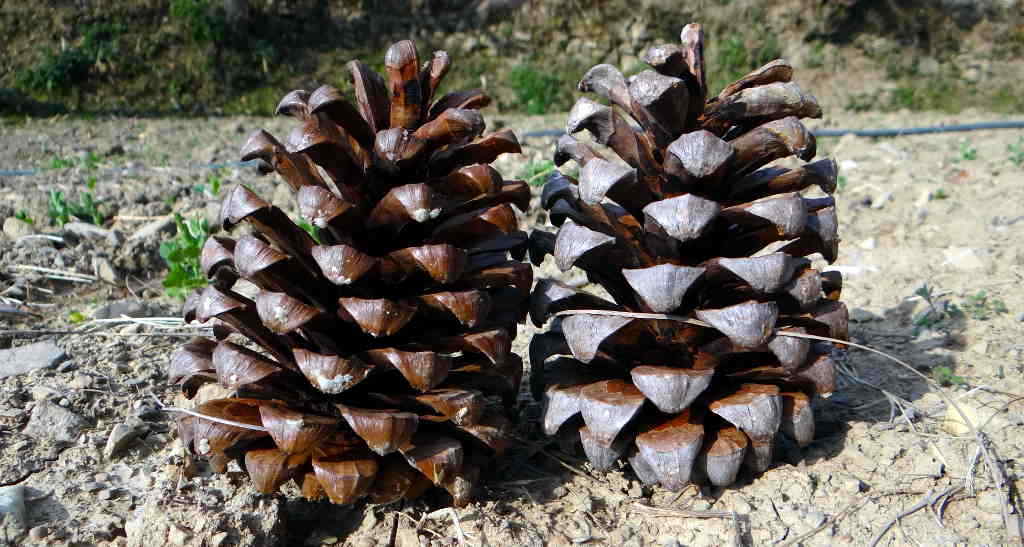
Pinus roxburghii – Chil (Click to enlarge)
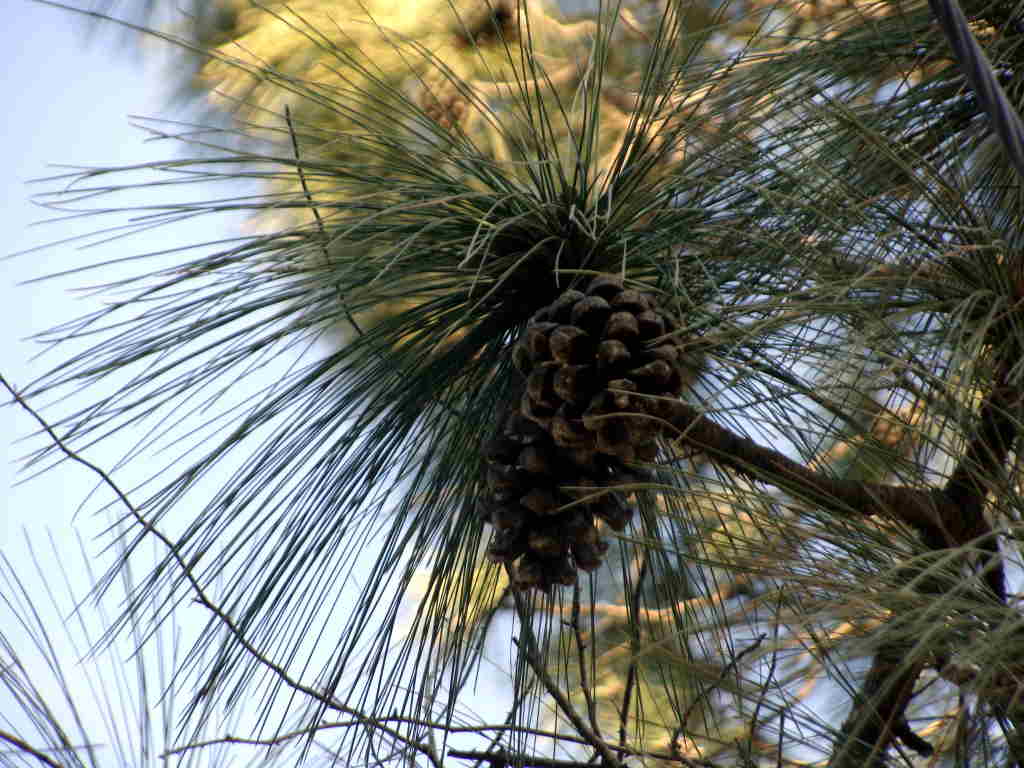
Pinus roxburghii – Chil, close up ( Click to enlarge)
The Chil pine is economically significant due to its resin, which is harvested for turpentine and other commercial products. Its timber is commonly used for construction and fuelwood. However, it is important to manage these resources sustainably, as overharvesting can impact both forest health and local livelihoods.
In the Great Himalayan National Park, Pinus roxburghii (Chil) forms part of the transition zone between broadleaf forests and higher coniferous ecosystems. This makes it a crucial species for biodiversity, offering shelter and nesting sites for birds like the Indian paradise flycatcher, woodpeckers, and various species of owls.
| Local name | Chil |
| Botanical name | Pinus roxburghii |
| Family | Pinaceae |
| Description | It is a tall tree, with grey bark found between 1000-2000m. Branches whorled, dimorphic. Leaves, 10-20 cm long in fascicles of 5, bluish to grayish-green, drooping. Seeds winged |
| Flowers & Fruits | February-April |
| Distribution | Frequently, found in association with Picea smithiana in all the valleys of GHNP |
| Uses | The pine is one of the most Valuable timber tree in the economy of the area. The wood furnishes the best boards, which are made into doors, floors, windows, boxes etc. The needles are added to give consistency to mud used in plastering. And needles are also used as beds in the cattle shed during winter months. |
Conservation and Awareness
Protecting native species like Pinus roxburghii (Chil) is essential to maintaining the ecological balance in GHNP. Promoting awareness about its environmental and economic value helps support conservation initiatives and sustainable forest management.