



Taxus wallichiana (Rakhal)
Taxus wallichiana, locally known as Rakhal, is an evergreen conifer native to the temperate forests of the Great Himalayan National Park (GHNP). It is prized for its medicinal properties and plays a critical ecological role in the mid-elevation forest zones. Due to overharvesting, this species is now classified as endangered.
Habitat and Distribution in GHNP
Within the Great Himalayan National Park, Taxus wallichiana is typically found:
-
Between 2,000 and 3,200 meters elevation
-
In moist temperate forests, often alongside oaks and rhododendrons
-
In the Tirthan and Sainj valleys, especially on north-facing slopes
Its presence marks stable, undisturbed forest habitats with minimal human intrusion.
Botanical Description
-
Foliage: Dark green, needle-like leaves arranged spirally
-
Bark: Thin, scaly, reddish-brown; peels off in irregular patches
-
Height: Grows slowly, reaching up to 10–15 meters
-
Reproduction: Dioecious, with seeds enclosed in a red aril rather than a cone
The tree’s slow growth rate and specific ecological requirements make natural regeneration a challenge.
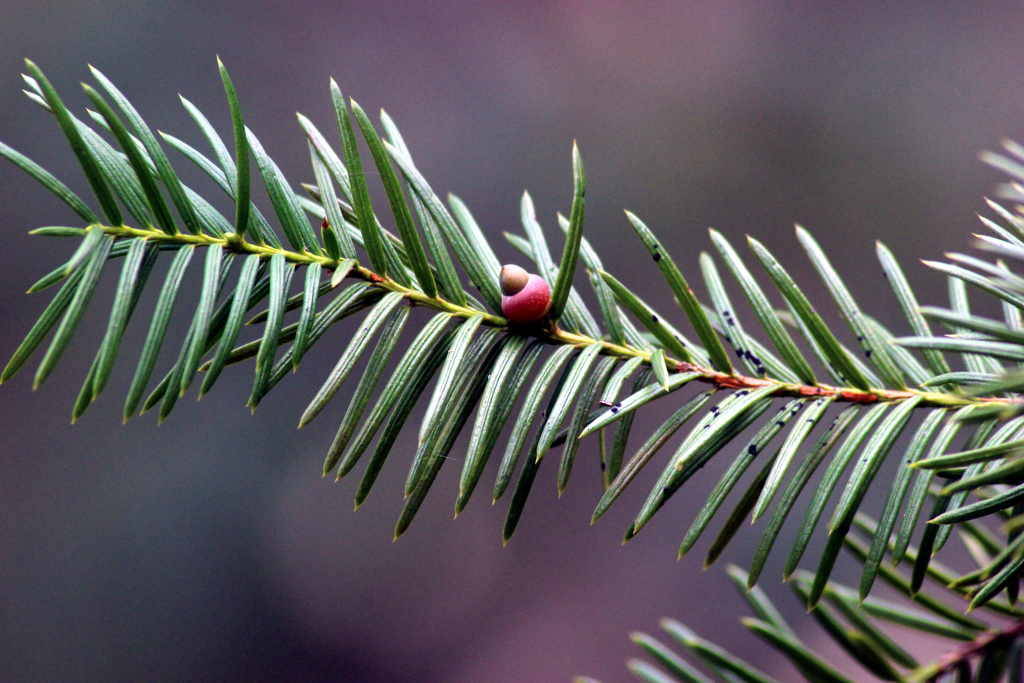
Taxus wallichiana – Rakhal (Click to enlarge)
| Local name | Rakhal, The Himalayan Yew |
| Botanical name | Taxus wallichiana |
| Family | Taxaceae |
| Description | It is a medium sized tree found between 2100-3200m. Bark thin, dark reddish-gray; branches horizontal, wide spread. |
| Flowers & Fruits | June – October |
| Distribution | The Himalayan Yew is a species of yew, native to the Himalaya from Afghanistan east to western Yunnan in south western China, at altitudes from 2,000–3,500 m. It is common as undergrowth in Abies forest, makes pure patches in all the valleys of GHNP |
| Uses | The leaves contain an alkaloid known as Taxol that is now supposed to cure the dreaded disease cancer. The fleshy fruits of Taxus wallichiana are eaten by wild animals, black bears and common langurs and even eaten by human beings. The white crystalline alkaloid (Taxine powder) is obtained from the seeds, it is poisonous in nature. Local people use the bark as an alternative to tea. The wood is used for cabinet making, furniture, poles and others decorative statues. |
Ecological and Medicinal Importance
-
Taxus wallichiana is critical for biodiversity conservation in GHNP
-
Its leaves and bark contain taxol, a compound used in cancer treatment
-
Supports forest understory by offering shade and microhabitat stability
-
Used by native birds for nesting and as a shelter tree for ungulates
Conservation in GHNP
Due to illegal harvesting for pharmaceutical demand, Taxus wallichiana is protected under:
-
IUCN Red List: Endangered
-
Indian Wildlife Protection Act: Schedule VI (plant species needing conservation)
GHNP’s strict protection measures and no-extraction policy have helped preserve Rakhal populations, although regeneration remains limited.